PFAS-free containers for food applications
 Müller Plastics
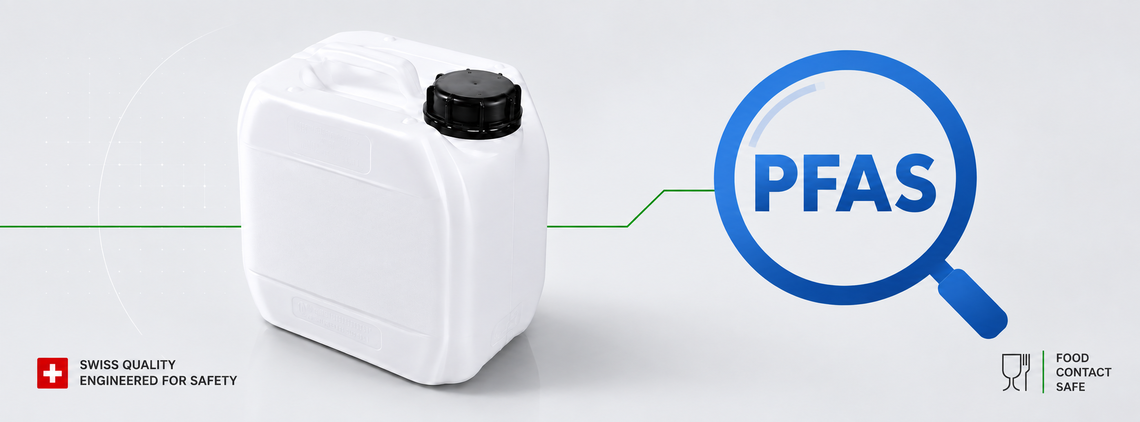
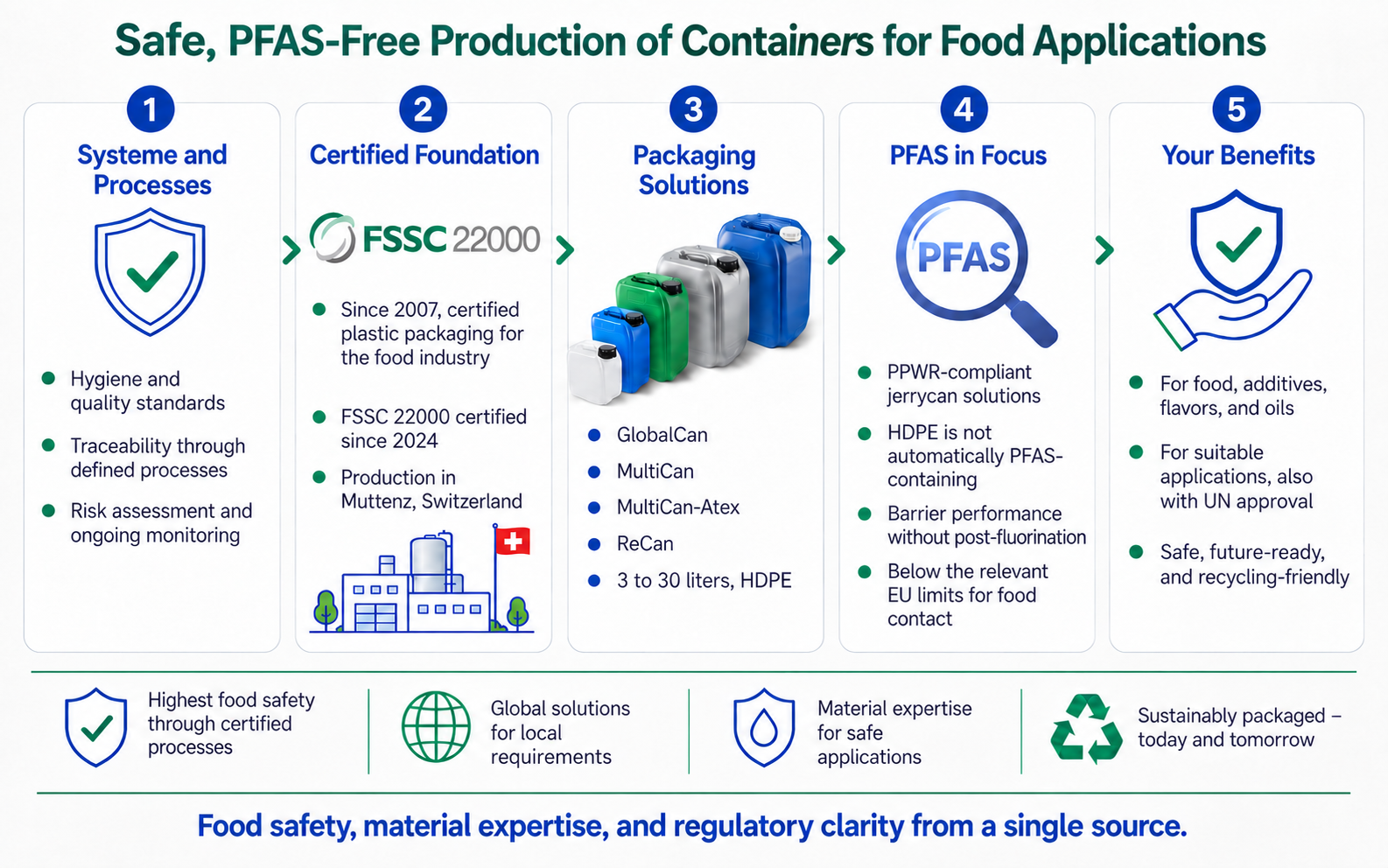
Müller Plastics has been a certified manufacturer of plastic packaging for the food industry since 2007. At its production facility in Muttenz, containers are manufactured under clearly defined hygiene and quality standards. Since 2024, the internationally recognized FSSC 22000 certification has formed the basis of the company’s food safety management system.
The combination of Swiss manufacturing, certified food safety, expertise in hazardous materials, and a variety of packaging technologies makes Müller Plastics the preferred partner for manufacturers of food, additives, flavorings, oils, and other sensitive products.
The product range includes four food-grade container series made of pure HDPE in sizes ranging from 3 to 30 liters:
- GlobalCan: a classic and versatile HDPE container
- MultiCan: features an EVOH barrier against oxygen and permeation
- MultiCan-Atex: features an additional electrically conductive outer layer
- ReCan: features recycled HDPE on the inside for select food and non-food applications
The appropriate design is tailored to the contents, the transport route, the required barrier properties, and legal requirements. In addition, all Müller Plastics containers are UN-approved for the transport of hazardous materials.
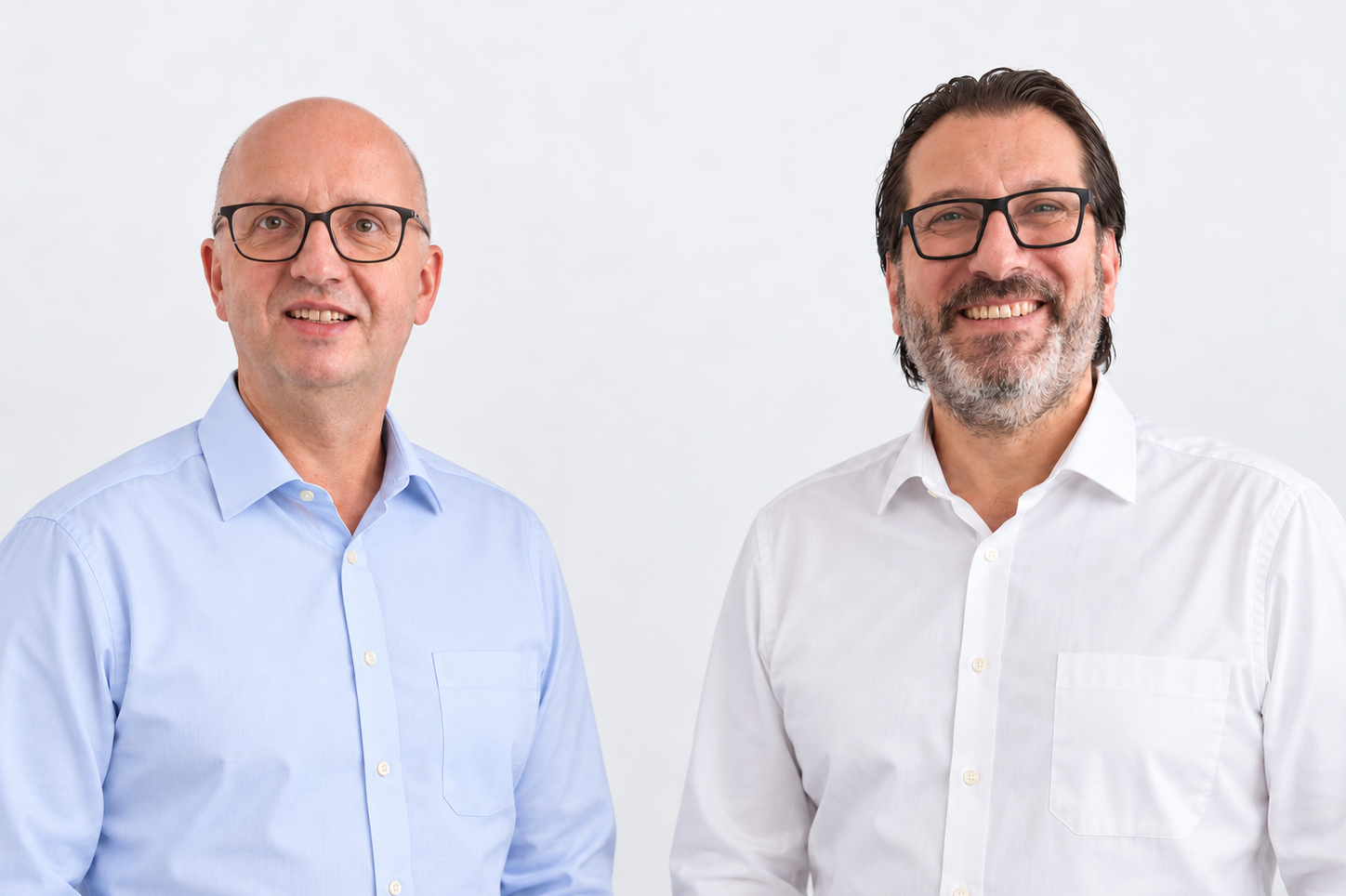
"For us, food safety begins with the selection of the material. Where a higher barrier effect is required, we rely on a precisely defined EVOH layer structure and avoid subsequent fluorination. This allows us to tailor the container specifically to the contents while simultaneously meeting the requirements for PPWR-compliant packaging,” explains Mischa Deibler, process engineer at Müller Plastics.
THE PPWR SETS NEW PFAS LIMIT VALUES
With the aim of reducing the environmental impact of packaging and ensuring the safety of food contact packaging, new requirements for packaging placed on the market in the European Union will take effect on August 12, 2026.
The PPWR Regulation requires that packaging be manufactured in such a way that the presence and concentration of substances of concern as constituents of the packaging material or individual packaging components are minimized.
Certain substances of concern are already regulated by the REACH Regulation. Standardized testing methods and long-standing empirical data are available for heavy metals. The assessment of PFAS poses a particular challenge due to the large number of possible compounds and the complex analytical requirements.
Based on the results of tests conducted on representative samples of packaging, the European Commission states in the document published on March 30, 2026, that the established PFAS limit of 50 mg/kg is likely to be exceeded, particularly when PFAS have been intentionally added.
PFAS are not intentionally used in Müller Plastics’ manufacturing processes and are not used for technological purposes. Through our ongoing compliance efforts, we ensure that up-to-date supplier declarations and relevant documentation confirming the non-use of PFAS are available for the raw materials we use.
In addition, representative samples of the manufactured containers were tested by an external laboratory for relevant PFAS parameters. Based on the available test results, our containers far exceed the applicable requirements regarding PFAS.
MULTICAN: BARRIER THROUGH LAYERED STRUCTURE RATHER THAN FLUORINATION PROCESS
A plastic container made of conventional HDPE contains no PFAS due to its base material. The issue becomes particularly relevant in connection with certain post-production fluorination processes. These are used to modify the surface of an already manufactured container and enhance its barrier properties.
Studies by the U.S. Environmental Protection Agency (EPA) have shown that PFAS can be produced as byproducts in certain fluorination processes. These substances can migrate from the container wall into the liquid contents. These findings specifically pertain to certain fluorinated HDPE containers and cannot be generalized to all plastic containers.
Müller Plastics achieves the required barrier effect without such post-processing fluorination. In the MultiCan, an integrated EVOH layer performs this function. The multilayer structure reduces oxygen ingress while also making it more difficult for certain components to leach out of the contents.
WHAT CUSTOMERS SHOULD KEEP IN MIND NOW
Several factors are crucial for selecting the right packaging system:
- For each application, it should be determined whether the container will be used for food, food additives, chemicals, hazardous materials, or pharmaceutical products.
- Equally important are the countries in which the filled product will be distributed and the packaging placed on the market.
- For your own documentation, it is recommended to have a current, product-specific PFAS declaration.
- The assessment should cover the entire packaging system. This includes the container, cap, seal, label, and any printed text.
- The statements “free of intentionally added PFAS” and “compliant with statutory PFAS limits” have different meanings and should be clearly distinguished from one another.
- The packaging’s compliance does not imply anything about the contents. Customers remain responsible for evaluating their formulations, raw materials, and production processes.
- For chemical-technical applications, the existing substance restrictions under REACH—or, in Switzerland, under the Chemicals Risk Reduction Ordinance—continue to apply. At the same time, a more comprehensive EU-wide restriction on the PFAS substance group is being prepared. The scientific assessment by the European Chemicals Agency is expected to be completed in the course of 2026.
Contact the specialists at Müller Plastics if you have any questions or would like to have your specific requirements reviewed. We take the time to provide you with expert advice.
WELL-PREPARED FOR FUTURE REQUIREMENTS
Müller Plastics’ container solutions combine food safety, technical performance, and PFAS compliance. This ensures that customers receive packaging that meets current requirements while also being prepared for future regulatory developments.
And even at the end of their life cycle, the containers offer another advantage. Because Müller Plastics avoids post-production fluorination that forms PFAS, the emptied and properly cleaned HDPE containers can be recycled without reservation.
This closes the loop—from safe packaging to responsible material recycling.
Wir freuen uns auf den Gedankenaustausch mit Ihnen.